
Research a prospect before the first meeting to verify you have the right person, understand the context of the introduction, and prepare a few useful questions. The finished brief should fit on one page. It should distinguish verified facts from reasonable inferences and unknowns.
The purpose is not to recite someone's biography back to them. Good preparation reduces avoidable confusion and lets the meeting begin with relevance. Bad preparation creates false confidence, collects personal data without a clear reason, or turns a conversation into an uncomfortable display of surveillance.
This guide is for legitimate business research. It does not replace your firm's privacy, communications, recordkeeping, or supervisory policies.
unknown nodeWhat should prospect research accomplish?
Before a first meeting, research should answer five questions:
- Is this the correct person?
- Why are we meeting now?
- What professional, household, or geographic context is relevant?
- Is there a relationship path that changes how the conversation should begin?
- Which open questions would help the prospect explain their situation?
Anything else must earn its place. An old job, distant relative, second phone number, or speculative wealth figure does not belong merely because a database returned it.
This standard is useful because a first meeting is usually an uncertainty-reduction exercise for both sides. The prospect is evaluating your competence, fit, and trustworthiness. You are deciding whether the firm can help and whether a second step makes sense.
Begin with the source of the meeting
The strongest context often arrives before any external research. Record how the meeting came about:
- Client or center-of-influence introduction
- Website inquiry or downloaded resource
- Event or seminar registration
- Professional or community connection
- Directly identified prospect
- Existing household or family relationship
Write the source in plain language and capture what the person actually asked for. Do not silently expand “interested in a retirement conversation” into a specific asset, tax, or estate problem.
Fidelity's 2024 Investor Insights Study found that recently advised or recently switched investors used multiple discovery channels: 32% cited a friend or colleague referral, 23% cited online search, and other respondents cited family, professionals, financial institutions, and media. The online survey included 2,100 investors with at least $50,000 in household investible assets, including 696 millionaires, and was fielded in late 2023 (Fidelity Institutional, copyright 2025).
The practical implication is not that one channel always wins. It is that the meeting source provides useful trust and intent context and should stay attached to the record.
Verify identity before adding detail
Identity resolution comes first because every later field depends on it. Use multiple stable attributes:
- Full name, including middle name or initial when available
- Current employer and role
- City or state
- Company biography or official filing
- Known address supplied through a legitimate relationship
- Education or employment timeline
Avoid merging records because two people share a name, employer, or metro area. If the match remains ambiguous, leave it ambiguous and ask a neutral question in the meeting.
For a business owner or executive, prefer the company's official site and primary filings. The SEC's EDGAR system provides public company filings and full-text search, including current and historical submissions (SEC EDGAR, retrieved August 16, 2026). For private entities, use the official state registry and preserve the role attached to a person; an organizer or registered agent is not necessarily an owner.
If the research starts from a property, follow the records-first process for finding a property owner by address.
Build a source trail while you work
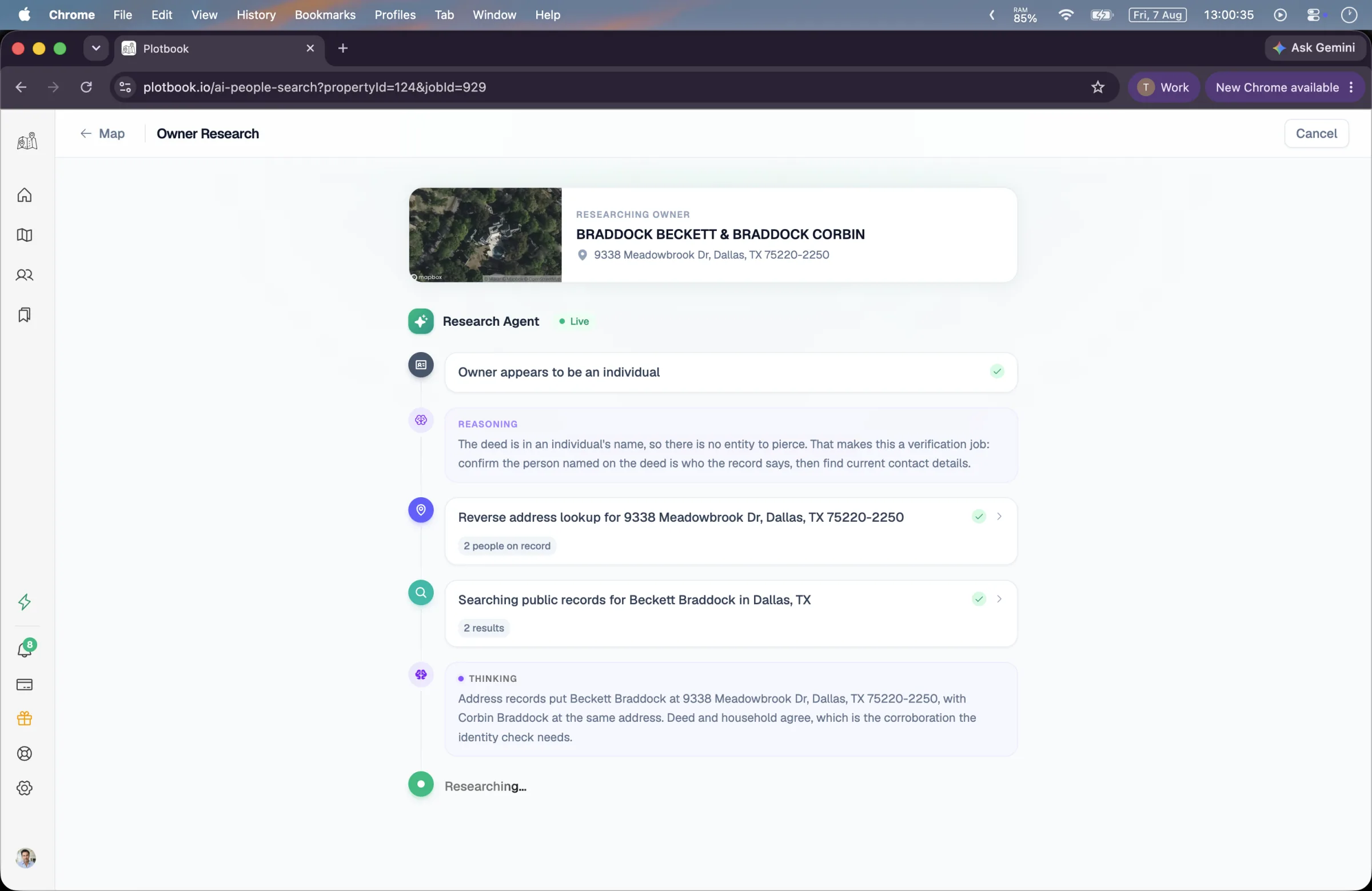
Illustrative Plotbook interface. The value of the timeline is auditability; displayed demo data should not be treated as a customer outcome.
Do not write a polished narrative first and hunt for citations afterward. Create a small ledger as you research:
|
Claim |
Source |
Source date |
Retrieved |
Role or field |
Confidence |
|---|---|---|---|---|---|
|
Current job |
Company bio |
Published/updated date |
Research date |
Title |
High |
|
Business role |
State filing |
Filing date |
Research date |
Manager, officer, organizer |
Medium to high |
|
Property title |
County parcel/deed |
Effective/recording date |
Research date |
Owner of record |
High |
|
Possible planning event |
Multiple public signals |
Dates vary |
Research date |
Inference |
Low to medium |
Record source limitations. A company biography is authoritative about the company's published title but can lag a change. A county tax record can identify an owner of record but not current occupancy. A news article can supply context but may repeat another source. A professional-data profile can be useful for discovery but still needs disambiguation.
Separate facts, inferences, and questions
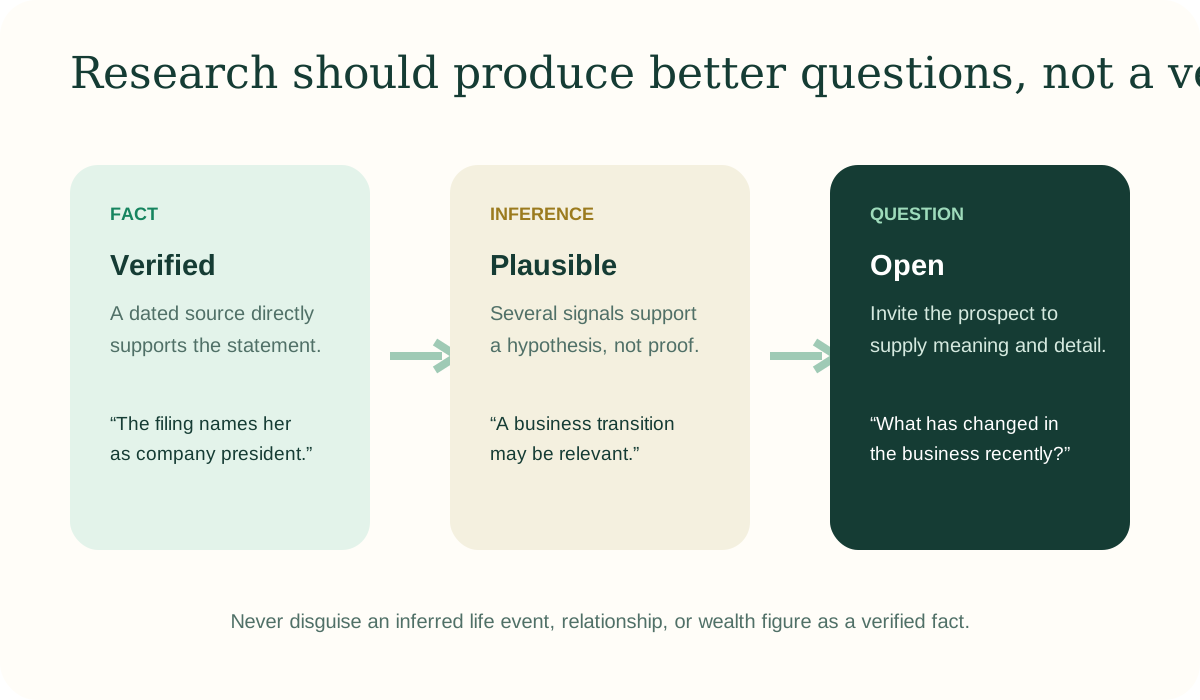
The meeting should resolve uncertainty. Research should not convert a plausible signal into a declared life event.
Use three explicit labels in your notes.
Fact: A dated, retrievable source directly supports the statement. Example: “The company's current leadership page lists her as president.”
Inference: Several facts support a hypothesis, but the meaning remains uncertain. Example: “A change in business responsibilities may make succession planning relevant.”
Question: An open prompt lets the prospect supply the meaning. Example: “What has changed in the business over the past year?”
Never use a question to smuggle in an unsupported conclusion. “How are you investing the proceeds from your sale?” is inappropriate if the sale has not been verified and the prospect has not raised it. “What prompted you to take this meeting now?” is both safer and more useful.
Research professional context, not a full biography
Professional context helps an advisor avoid basic mistakes and identify a useful conversation path. Focus on:
- Current role and organization
- Career stage and major verified transitions
- Business ownership or leadership roles
- Publicly described responsibilities
- Industry-specific planning complexity
- Known connection to the introducer
Do not infer compensation from a title. Do not treat a private company's revenue as the person's net worth. Do not assume a founder still owns the same percentage after financing or transfers.
Plotbook's natural-language people search can search professional and residential data providers, group likely duplicate records, show source badges, and assign match confidence. Contact fields are merged deterministically so the AI does not invent an email or phone number. The tool supports research; the user still decides whether the identity and use are appropriate.
Add property and household context carefully
Property can ground a profile in a real asset and location. It can also tempt the researcher into overclaiming.
A defensible property note says:
- The county-sourced record names a person or entity as owner of record.
- The parcel has a stated assessed value and effective tax year.
- The tax mailing address matches or differs from the site address.
- The ownership form is personal, joint, trust-held, or entity-held.
It does not say the person lives there, owns it free and clear, or has liquid assets equal to the property value.
Plotbook's property wealth map lets a user move from a territory to a parcel, read the deed-owner field, and choose between instant household lookup and deep entity research. When the deed names an LLC, trust, or estate, keep the entity as owner of record until sources support a natural-person association.
Treat wealth as a range and a hypothesis
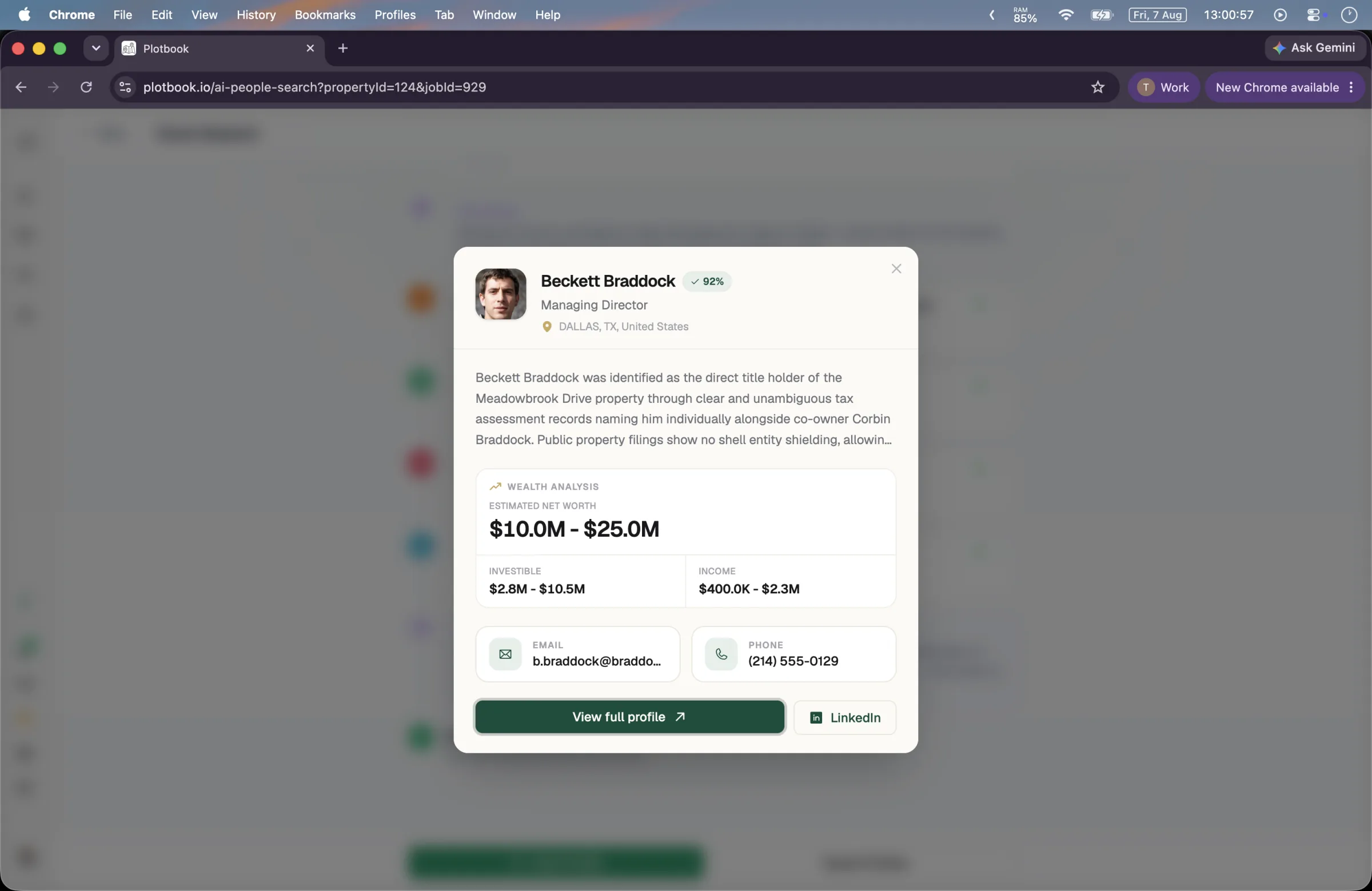
Illustrative interface. Wealth ranges are estimates for prioritization, not verified account balances or eligibility decisions.
Private wealth is not observable like a public company's market capitalization. Property, business interests, career history, public securities, and transactions can support a range. Liabilities, trusts, private-company value, co-ownership, and liquidity can remain unknown.
Keep four concepts separate:
- Annual income: a flow over time
- Total assets: gross asset value before liabilities
- Net worth: assets minus liabilities
- Investible assets: the portion that may be available for management
The complete method is explained in how net worth is estimated. For a first meeting, the wealth section should usually be short: the observed signals, a wide enough range, confidence, and the assumptions most likely to change it.
The estimate should help determine whether further research is worth the time. It should not dictate suitability, credit, service eligibility, or how the prospect is treated.
Look for a relationship path before a cold route
A relationship path changes the opening of the meeting. Review legitimate, relevant connections:
- Who made the introduction and why
- Shared professional organization
- Existing client or household relationship
- Attorney, CPA, or business-advisor connection
- Community, charity, or educational involvement the person publishes openly
- Geographic context relevant to the practice
Do not reveal another client's private information to establish common ground. Do not imply a relationship that does not exist. A shared city or school is context, not trust.
The 2024 Fidelity study found that only 39% of investors in dual households said their advisor reached out to both partners equally; the reported Net Promoter Score was 1.6 times higher when outreach was even. This is survey association, not proof of causation, but it is a useful reminder to identify who is expected in the meeting and avoid treating one partner as incidental (Fidelity Institutional, copyright 2025).
Compress the work into a one-page brief
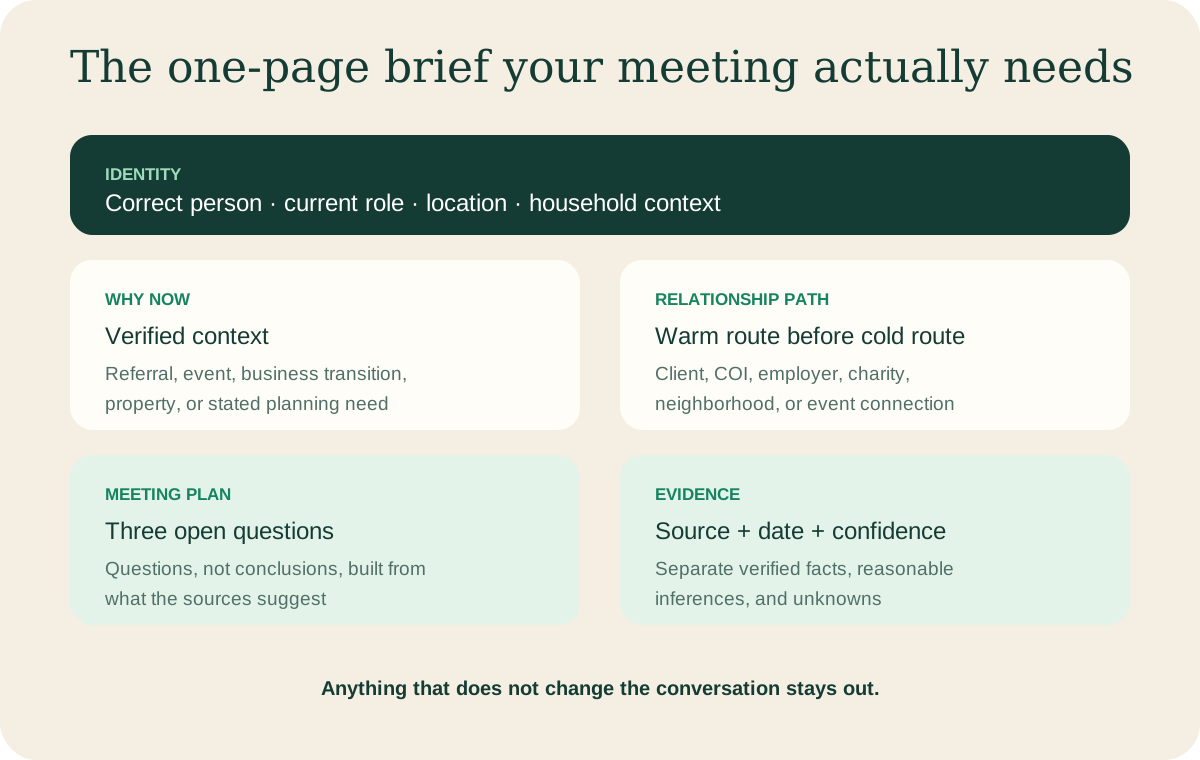
The brief is a decision aid, not a dossier. Anything that does not improve the meeting should stay out.
Use this structure:
Identity
Name, current role, organization, location, and the disambiguating attributes that confirm the match.
Meeting context
Source of the meeting, stated reason, known participants, and what the prospect has already received or asked.
Relevant facts
Three to five dated facts that may change the conversation. Each gets a source.
Hypotheses and unknowns
Two or three cautious inferences, labeled as such, plus important missing information.
Questions
Three open questions. Start with what prompted the meeting, then move toward goals, constraints, decision process, and desired next step.
Relationship and follow-up
Introducer, center of influence, prior interaction, approved contact route, and record owner inside the firm.
Save the profile without creating a data swamp
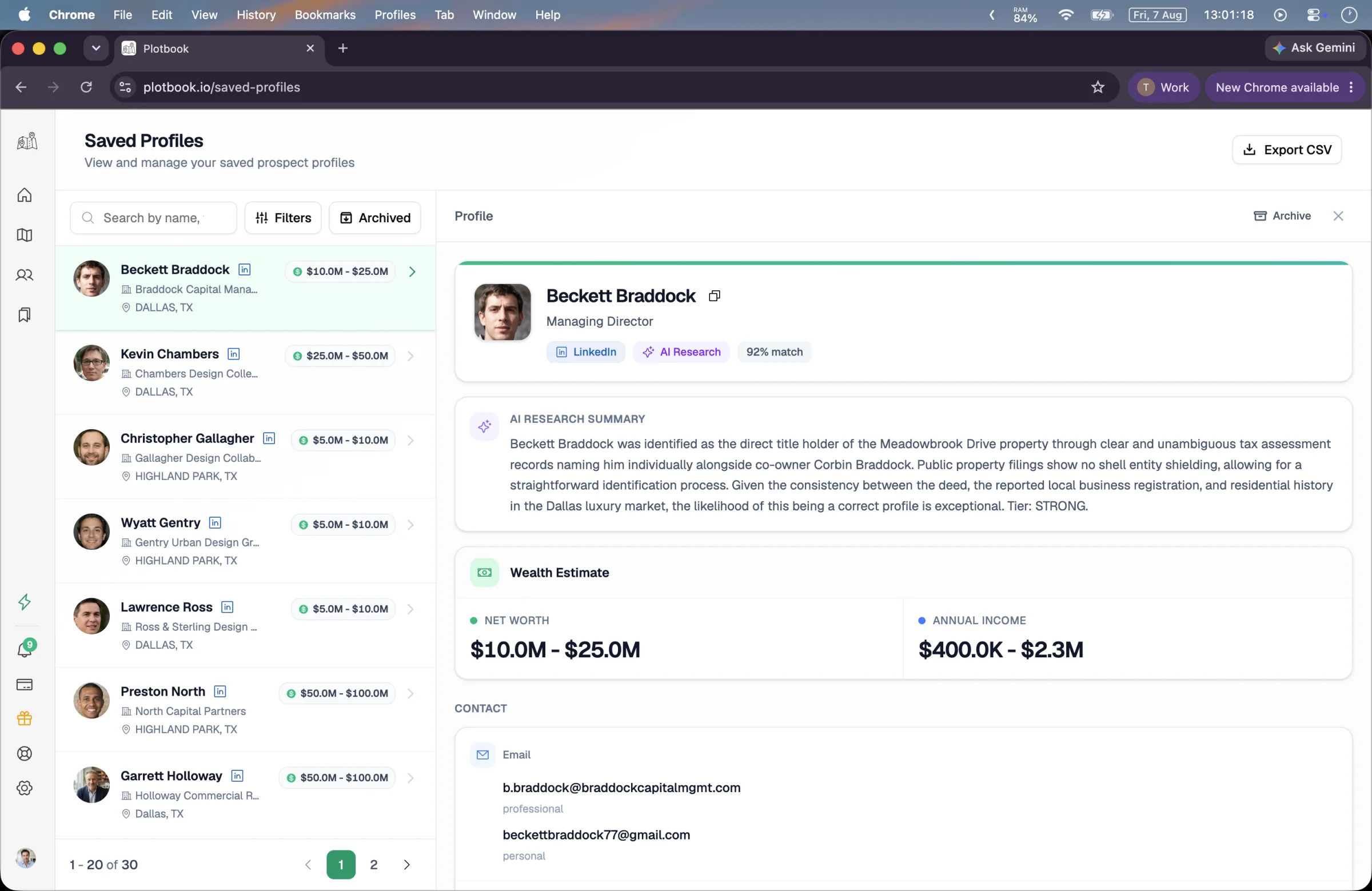
Illustrative Plotbook interface with demo data. A saved record should preserve provenance and uncertainty, not just accumulate more fields.
After research, retain what the firm has a legitimate reason to use. Plotbook's saved profiles can hold source, contact information, research summary, property portfolio, range-based wealth estimates, confidence, and editable notes. Profiles can be archived or deleted, and selected fields can be exported to CSV on eligible plans.
The product does not provide a pipeline stage board or live CRM sync. A firm should define which system owns the next action, what data moves into it, how long the record is kept, and who can access it.
Protect personal information and control outreach
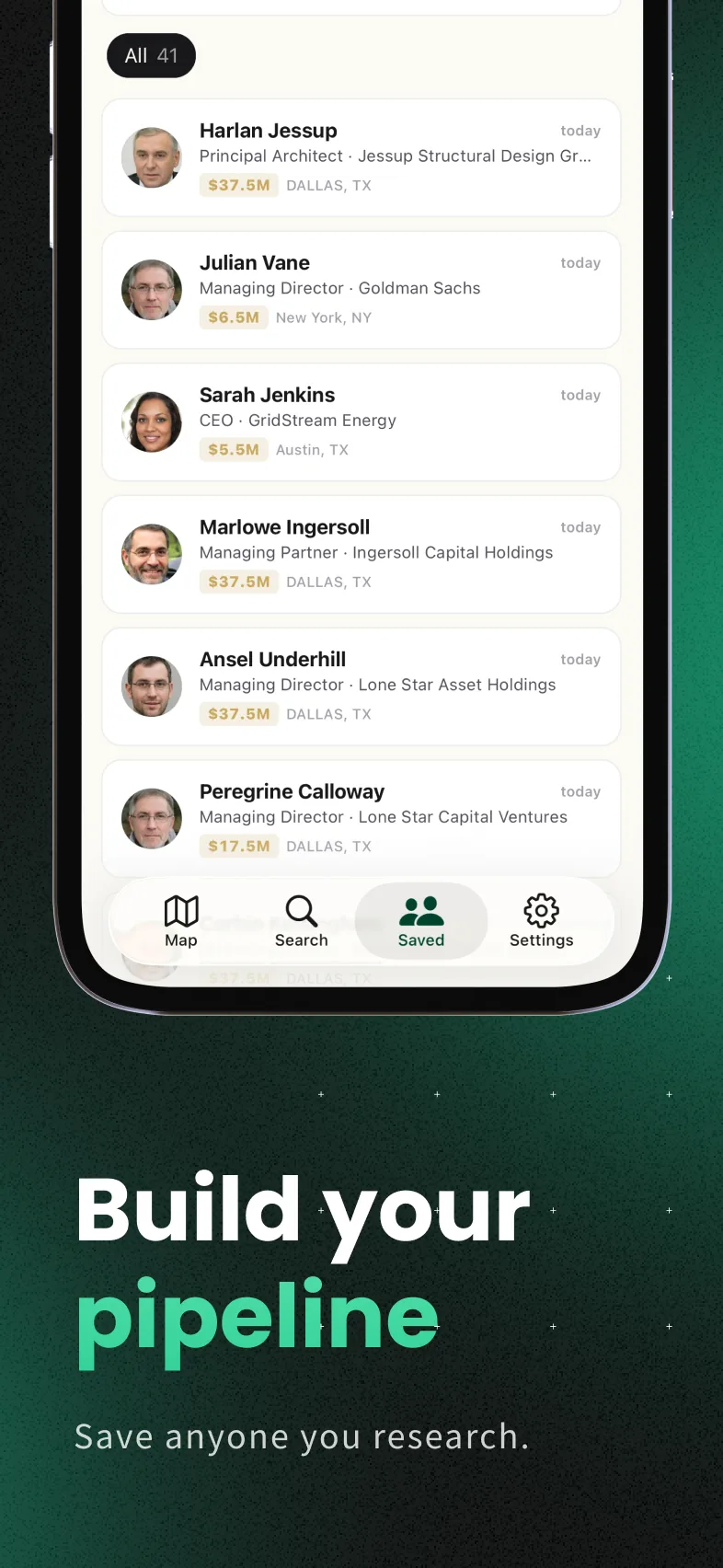
Illustrative Plotbook for iPhone interface with demo data. One account keeps saved research available on iPhone and web; portability makes access controls and minimum-necessary data more important, not less.
Public availability does not remove every privacy or compliance obligation. Data gathered for research can become customer information later, and the firm still needs policies for access, retention, disposal, vendors, and incidents.
The SEC's amended Regulation S-P requires covered institutions to maintain an incident-response program and broadened safeguards and disposal requirements. The compliance date was December 3, 2025 for larger entities and June 3, 2026 for smaller entities (SEC small-entity compliance guide, retrieved August 16, 2026). Applicability depends on the firm; use counsel or compliance guidance for your situation.
Outreach is a separate decision. FINRA Rule 2210 governs communications for member firms, while the FTC's CAN-SPAM guidance says commercial email has requirements even when it is not bulk email and even when it is business-to-business (FINRA Rule 2210; FTC CAN-SPAM guide, retrieved August 16, 2026).
This is not a complete legal analysis. Channel, state law, firm registration, message content, relationship, and internal policy all matter.
Use a time-boxed research workflow
Ten-minute preparation
For a warm introduction or inbound inquiry:
- Confirm identity and meeting source.
- Read the company or professional biography.
- Check one primary source for the most relevant claim.
- Write three open questions.
- Review participants, logistics, and prior correspondence.
Thirty-minute preparation
For a complex owner, executive, or entity-held property:
- Complete the ten-minute pass.
- Verify business roles through filings or official pages.
- Add property or household context only if it is relevant.
- Record sources, dates, contradictions, and confidence.
- Draft the one-page brief and remove anything that will not affect the meeting.
Stop conditions
Stop when the identity is sufficiently resolved, the meeting context is clear, and the next useful information should come from the prospect. More searching is not automatically better preparation.
Frequently Asked Questions
What should I know before a first meeting with a prospect?
Know who the person is, how the meeting originated, what they asked for, who will attend, and three relevant questions. Add professional, property, or wealth context only when it can improve the conversation and the source is clear.
How much time should prospect research take?
Use a time box based on complexity. Ten minutes may be enough for a clear warm introduction. Thirty minutes can be appropriate for an executive, business owner, or entity-held property. Stop when the next useful evidence belongs in the conversation.
Should I mention what I found online?
Mention a public fact only when it is relevant and natural. Do not demonstrate the depth of the research for its own sake. Turn uncertain signals into open questions and let the prospect decide what to share.
Can I rely on an estimated net worth before the meeting?
Use it only as a directional research aid. Review the component signals, range, confidence, and assumptions. Do not present it as a verified balance sheet or use it as an automatic suitability or eligibility rule.
What if two sources disagree?
Preserve both sources and their dates. Prefer primary and newer evidence when it directly addresses the claim, but do not hide a material conflict. Mark the field uncertain and resolve it through another source or a neutral question.
Arrive informed, not overconfident
Good prospect research is compact, sourced, and humble. It confirms identity, explains why the meeting exists, preserves the relationship path, and prepares questions that invite the prospect to supply meaning.
The brief should never make a stranger feel fully known. It should help the advisor avoid obvious mistakes and spend the meeting on the person's actual goals.
Plotbook combines owner research, professional and household context, range-based wealth estimates, and saved profiles in one source-aware workflow. Use the AI owner research feature when the public record is complex, then keep the final meeting brief to what is relevant and defensible.